The Ceiling Stain That Was Only a Cracked Boot
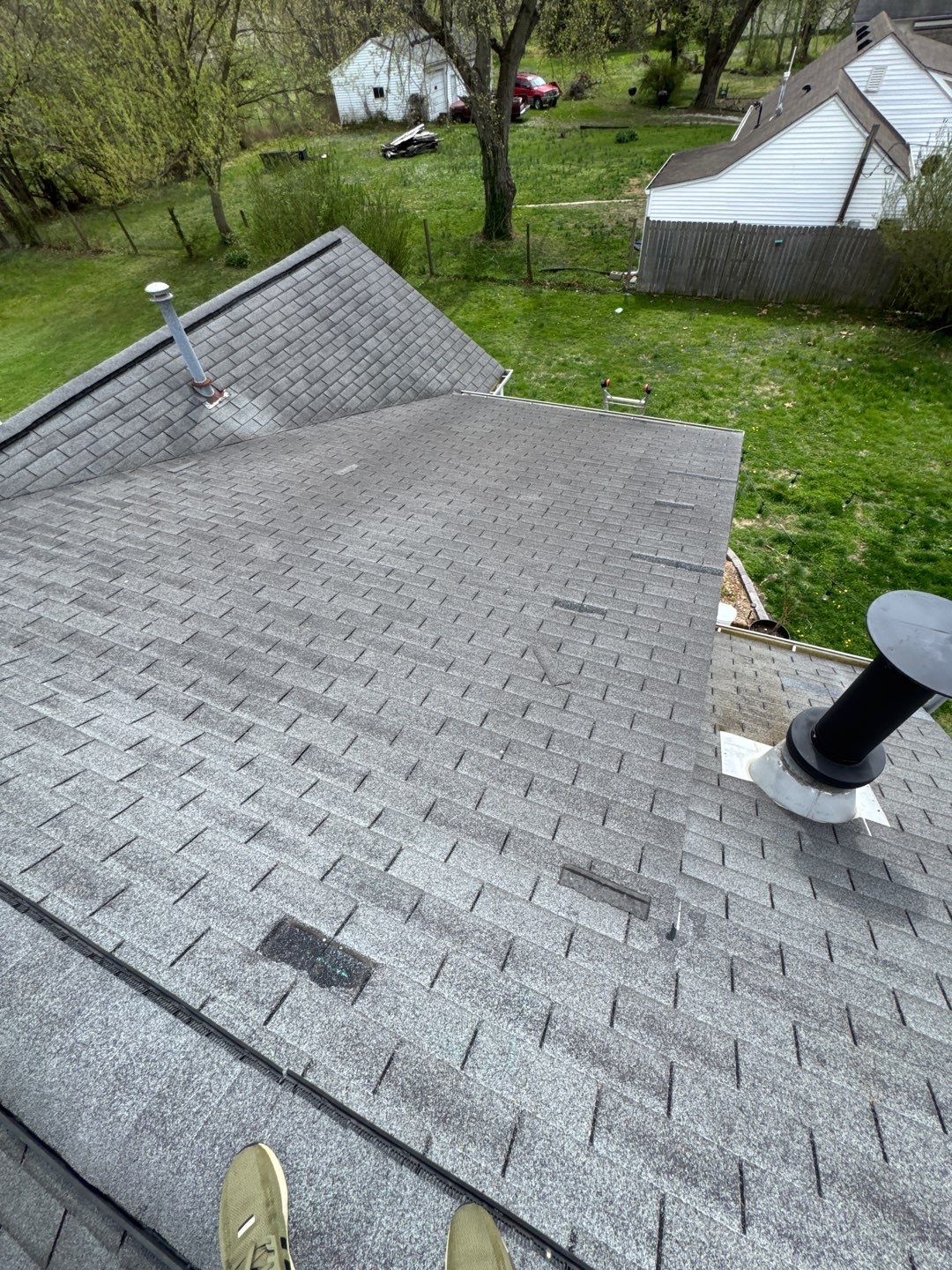
A homeowner on the east side of Waverly called us last spring convinced she needed a new roof. A yellow ring had appeared on her dining room ceiling after a hard rain, and a door-knocker had already told her the roof was finished. When our crew climbed up, the story was much smaller: a single cracked rubber boot around a plumbing vent and three lifted shingles right beside it. The field itself had years of life left, with good granule coverage and no bruising. We replaced the boot, swapped the three shingles, resealed the nearby nails, and the repair landed in the lower hundreds rather than the thousands a replacement would have cost. The stain dried within a week. That is the kind of call we want, and it is exactly why a real inspection beats a driveway diagnosis.
The Thirty-Year-Old Roof That Looked Fine From the Curb
Contrast that with a couple in an older Waverly neighborhood whose roof looked perfectly acceptable from the street. It was original to the home and right around thirty years old. From the ground, nothing screamed emergency. On the roof, the shingles cracked the moment our crew stepped on them, the sealant strips had long since failed, and the south slope had granule loss down to bare mat in several spots. There were no active leaks yet, which is the part that fools people. We showed them photos of brittle shingles snapping in hand and explained that the next real wind event would start lifting the field. They scheduled a replacement on their own timeline, before a leak forced an emergency, and landed in the range we quote for a typical architectural replacement rather than paying the premium that comes with water damage and rush scheduling.
The Hail Claim the First Adjuster Denied
After a June storm dropped hail across a Waverly neighborhood, one homeowner filed a claim and was denied, with the adjuster attributing the granule loss to age. He nearly let it go. We walked the roof with him on a re-inspection, chalked fresh bruising on each slope, photographed the dented soft metal on the gutter caps, and pulled a shingle that showed a clear mat fracture. With that documentation, the claim was reopened and approved. He paid his deductible and the replacement moved forward as a covered loss. We mention this not to push everyone toward a claim, since plenty of damage is not claim-eligible, but because real storm damage genuinely hides in plain sight, and a denial is often a documentation problem rather than a sound roof.
The Roof We Told Them to Keep
A Waverly family was ready to spend on a replacement because a relative said their fifteen-year-old roof looked like it was going. We inspected it expecting to confirm. We could not. The granule coverage was solid, the flashing was intact, the attic was dry and properly vented, and the shingles were still flexible. We told them plainly that the roof had years left and that spending now would be wasting money. We made one minor flashing touch-up, handed them photos for their records, and told them to call us in a few years. They have sent three neighbors our way since. Telling a homeowner to keep a roof is not a lost sale to us. It is how Waverly Roofing has built the bulk of its Waverly work, one honest walkthrough at a time.
The Repair That Bought Years
A homeowner in an older Waverly neighborhood was bracing for a replacement after a leak showed up over a back bedroom. The roof was around fourteen years old, which is well inside normal service life, so we went in skeptical of a tear off. The leak traced to a single length of failed step flashing where a dormer met the main roof, plus a couple of lifted shingles nearby. The field was sound, the attic was dry and well vented, and the granule coverage was good. We re-tied the flashing into the shingle courses, replaced the lifted shingles, and the repair held. That roof did not need replacing, and saying so cost us a big job and earned us a customer who has called us twice since for unrelated work.
The Roof That Failed in Plain Sight After a Wind Event
A Fox Hill homeowner called after a windy spring, having lost a handful of shingles. From the ground it looked like a simple repair, and a year earlier it might have been. On the roof, though, our crew found that the sealant strips had let go across most of the field, so shingles lifted by hand with almost no effort. The roof was past twenty years old, and the wind had simply exposed what age had already done. We showed the homeowner shingles peeling up across multiple slopes and explained that patching a few would not stop the rest from going in the next storm. They moved forward with a replacement on their own schedule, before a leak forced it, which is always the cheaper version of that story.
Every one of these Waverly jobs came down to the same thing: a real look at the roof, and a recommendation that matched what we actually found rather than what paid us the most that week.
The Premature Failure We Traced to the Attic
One Waverly homeowner was frustrated that a roof barely past ten years already looked tired, with curling along the upper courses. A lazy answer would have been to sell a replacement and move on. Instead we went into the attic and found the real culprit: blocked soffit intake and almost no exhaust at the ridge, so the attic was baking the shingles from below. We explained that putting a new roof over the same airflow problem would buy the same premature failure in another decade. The fix was a ventilation correction alongside the roofing work so the new shingles get the airflow they need. That attic visit is a standard part of how we assess a roof, because a roof that cannot breathe fails early no matter how good the shingles were on day one.
What Your Free Inspection Actually Includes
When we come out for a free Waverly assessment, you get more than a verdict. Our crew inspects every slope, valley, and penetration, checks the flashing at the chimney and vents, and walks the field where it is safe to feel for soft decking that hides below the surface. We go into the attic when access allows to look for daylight, staining, damp insulation, and ventilation problems. You get photo documentation you can keep, claim or no claim, and a written, plain-language recommendation: repair, replace, or monitor, with the reasoning behind it. If the visit ends with us telling you the roof has good years left, that is a win for you and a normal outcome for us. Here is what to expect on the visit.
- A full inspection of every slope, valley, and penetration
- An attic check for daylight, moisture, and ventilation issues
- Photos you keep, whether or not a claim is involved
- A written recommendation with the honest reasoning
- A clear answer on whether repair beats replacement right now